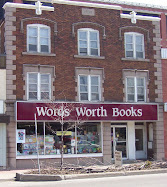
I'm really glad this came up because it's given me a chance to give voice to something that's always bugged me about the whole big vs little bookstore debate. The American writer Craig Clevenger, who publishes with this wonderful little concern, recently wrote on his site of his difficulty in squaring independent bookstores who constantly showcase their independent cred but "don’t support writers from independent publishers, i.e., me."
He goes on to say that he's had independents tell him they don't stock his books because of space concerns, smallish sales or whatever. Obviously, upon hearing that he wonders why he should continue to shout out to independent shops or fork over money himself.
Fair question. Any independent bookseller who doesn't at least try to hand sell independent titles regularly should turn in their superhero costume and shill at a chain.
Specifically in Clevenger's case, Macadam Cage is a hell of a press; defiantly literary, well edited and designed and they have a remarkable list. Everyone knows about the Time Travelers Wife, but not so many know that it was Macadam Cage who published it in the States and tended it's fire until it took off.
Most of us at the shop have cracked at least one of their titles, and you know, we do what we can with them. We have the new book in stock too, Craig.
But if a small bookstore is merely replicating a fraction of a chain stores inventory, then that's not much of an option.
Canada has lots of great small presses and of course our reach into the U.S reveals hundreds of them. The smaller presses are home to some wonderful stuff and because they don't have as big a machine to feed, their books are also a damn sight cheaper than stuff from the larger houses.
If only a small fraction of people who read Mark Haddon's Curious Incident etc. etc. would pick up this, well then they'd have a better book in their hands for less, I suppose. These kinds of examples are endless, and the whole reason for being in an independent shop is being able to put the good stuff into play. The bestseller list will still be there whether I pay much attention to it or not.
Posted by Dave
Saturday, September 30, 2006


Friday, September 29, 2006
incoming
I'm really looking forward to this. (scroll down)
Margaret MacMillan's last book, Paris 1919 almost didn't get picked up in Canada. Naturally, it became a huge hit.
But there's something about Richard Nixon. In the post Second World War era, he stood alone as a Shakespearean sized leader.
I'm not an admirer as such, but I remember being very struck by Bill Clinton seeking his council early in his first term when he was still finding his feet in the early Nineties, not very long before Nixon's death. It was seen in some corners as proof positive that he had succeeded in erasing from history many of his earlier sins.
While that's a bit optimistic, some Democrats have softened up on Nixon just a bit especially given the rightward U.S drift in succeeding years. Even Noam Chomsky has called Richard Nixon "in many respects, the last liberal President."
Come out Nov 29 to meet the wonks.
Posted by Dave
Margaret MacMillan's last book, Paris 1919 almost didn't get picked up in Canada. Naturally, it became a huge hit.
But there's something about Richard Nixon. In the post Second World War era, he stood alone as a Shakespearean sized leader.
I'm not an admirer as such, but I remember being very struck by Bill Clinton seeking his council early in his first term when he was still finding his feet in the early Nineties, not very long before Nixon's death. It was seen in some corners as proof positive that he had succeeded in erasing from history many of his earlier sins.
While that's a bit optimistic, some Democrats have softened up on Nixon just a bit especially given the rightward U.S drift in succeeding years. Even Noam Chomsky has called Richard Nixon "in many respects, the last liberal President."
Come out Nov 29 to meet the wonks.
Posted by Dave
Oh yeah, well in my day...
My admittedly hazy memory of being gouged for textbooks was just something I figured was part of higher education, like last second panic and a generalized anxiety disorder.
Students today are still getting smacked pretty good, but it looks like there's a lot more options to get books cheaper.
The standout paragraph, however is this:
(U of T professor Don) "Brean has been teaching for 35 years and prefers to use a package of readings by different authors to teach his courses rather than a textbook.
"Younger and less seasoned professors would take comfort and lead courses with textbooks."
Brean doesn't even use the textbook he wrote in his classes. Other professors use his book, yet despite earning royalties from the number of books sold, Brean says he doesn't actively solicit sales.
"This way there is zero conflict of interest."
This just seems an eminently sensible way to keep costs down, although with education payouts spiraling upward, perhaps students might consider voting in better numbers to get their issues addressed.
Posted by Dave
Students today are still getting smacked pretty good, but it looks like there's a lot more options to get books cheaper.
The standout paragraph, however is this:
(U of T professor Don) "Brean has been teaching for 35 years and prefers to use a package of readings by different authors to teach his courses rather than a textbook.
"Younger and less seasoned professors would take comfort and lead courses with textbooks."
Brean doesn't even use the textbook he wrote in his classes. Other professors use his book, yet despite earning royalties from the number of books sold, Brean says he doesn't actively solicit sales.
"This way there is zero conflict of interest."
This just seems an eminently sensible way to keep costs down, although with education payouts spiraling upward, perhaps students might consider voting in better numbers to get their issues addressed.
Posted by Dave
Tuesday, September 26, 2006
Lemony Snicket and his crazy tear-away sheet action
I’m really behind on the Lemony Snicket train, here meaning the riotous popular interest in at least the first three books and not to mean a literal locomotive. I read the first book a while ago after seeing the movie, which I rather loved, and thought that it was weak. The books are beautiful, and funny, and I’m all for the Snicket atmosphere (the untrustworthy narrator surrounded by a further literary mystery), but I sadly couldn’t continue reading them.
Then, regardless of how many pretty displays we receive from publishers hawking their wares, we got this awesome LS display that COUNTS DOWN, using very funny tear-away sheets, to the very last book in the series (which is available on October 13th) and I have made a pact with myself to read all of the books before then. *audible nostril inhale* But I still didn’t like re-reading the first book. It, sadly, is a Bad Beginning. Or, rather, I mean to say that it was funny and I liked its style but it had a weak flopsy story.
The Reptile Room was better. I laughed out loud to this:
“Violet, Klaus, and Sunny all knew that if [Count Olaf] figured out a way to seize their fortune, he would slit the throats of the Baudelaire orphans as easily as you or I might eat a small butter cookie”
And it was even better reading for book 3, The Wide Window:
“Frustration is an interesting emotional state, because it tends to bring out the worst in whoever is frustrated. Frustrated babies tend to throw food and make a mess. Frustrated citizens tend to execute kings and queens and make a democracy. And frustrated moths tend to bang up against lightbulbs and make light fixtures all dusty”
I loved Aunt Josephine and her annoying grammarnazi moments and outrageous phobias. But I wonder by this time if the rehashed Olaf-in-disguise-as-central-plot plots are maybe not strong enough to warrant further books. And I just want to hit Mr. Poe, whose ignorance is just ludicrous considering the amount of times now that Olaf has traipsed around in disguise and Poe only believes it’s him by his ankle tattoo. But book 3 was tense and had a good story with some good progress on the Snicket mystery and a redeeming character like Aunt Josephine. I’m looking forward to reading the fourth book and I see that one future book is set at a boarding school (and I love boarding school settings).
So its been a bumpy start but I have hope for the next 9 books, which I WILL have read before October 13th.
The tear-away sheet for today is "If you are looking forward to the book that's coming out in 17 days, you should be ashamed of yourself".
(posted by Mandy)
Then, regardless of how many pretty displays we receive from publishers hawking their wares, we got this awesome LS display that COUNTS DOWN, using very funny tear-away sheets, to the very last book in the series (which is available on October 13th) and I have made a pact with myself to read all of the books before then. *audible nostril inhale* But I still didn’t like re-reading the first book. It, sadly, is a Bad Beginning. Or, rather, I mean to say that it was funny and I liked its style but it had a weak flopsy story.
The Reptile Room was better. I laughed out loud to this:
“Violet, Klaus, and Sunny all knew that if [Count Olaf] figured out a way to seize their fortune, he would slit the throats of the Baudelaire orphans as easily as you or I might eat a small butter cookie”
And it was even better reading for book 3, The Wide Window:
“Frustration is an interesting emotional state, because it tends to bring out the worst in whoever is frustrated. Frustrated babies tend to throw food and make a mess. Frustrated citizens tend to execute kings and queens and make a democracy. And frustrated moths tend to bang up against lightbulbs and make light fixtures all dusty”
I loved Aunt Josephine and her annoying grammarnazi moments and outrageous phobias. But I wonder by this time if the rehashed Olaf-in-disguise-as-central-plot plots are maybe not strong enough to warrant further books. And I just want to hit Mr. Poe, whose ignorance is just ludicrous considering the amount of times now that Olaf has traipsed around in disguise and Poe only believes it’s him by his ankle tattoo. But book 3 was tense and had a good story with some good progress on the Snicket mystery and a redeeming character like Aunt Josephine. I’m looking forward to reading the fourth book and I see that one future book is set at a boarding school (and I love boarding school settings).
So its been a bumpy start but I have hope for the next 9 books, which I WILL have read before October 13th.
The tear-away sheet for today is "If you are looking forward to the book that's coming out in 17 days, you should be ashamed of yourself".
(posted by Mandy)
Monday, September 25, 2006
popcorn book?
A story in the local paper today made me wonder about the validity of using movies in area high schools to illustrate ideas and concepts common to core subjects. My initial reaction was mild annoyance that books weren't used for this and that still goes; but to be fair I have no idea of the percentage Hollywood takes up in area classrooms relative to Shakespeare, assigned Canadian history texts and the old standby; William Golding's Lord of the Flies.
Books are still the big dog of the curriculum and that should be a given but the article quotes educators that I quite like and respect. If teachers believe a little celluloid may be enough to get the kid into the boat, as it were, then perhaps he'll learn to paddle later on.
I have little doubt that the emails to the Record from the perpetually outraged are already on the way moaning that so and so's taxes go to pay for a teacher to watch movies or other such tripe, but that misses the point.
A teacher who has tried to reach "students who aren't academically inclined and dislike reading"
could hardly be faulted for trying something, anything to get some ideas in a lesson plan to stick.
My worry is that some students who aren't strong enough readers will view film as a full scale substitute.
Books are about so much more than telling a story and even if that weren't so, I'm not sure movies can even do that coherently anymore. Okay, maybe it's just that the Jackass remake is far and away number one right now, but I'm only just old enough to remember the Seventies when American movie making could support a thriving critical culture and still sell popcorn.
Of course there are exceptions and it's not my place to argue for any movie over any other movie, but discretion around the use of film in the classroom combined with some (much) needed fresh air in the high school reading lists would mean no one ever again be stuck in a building with poor air flow in June staring at the train wreck that is Mel Gibson.
Books are just better teaching tools than film, the fact that "kids are hooked into the electronic media far more than we ever were" is entirely true, but by widening the book lists a bit, making room for some of the more out there small presses, graphic novels and genre stuff, educators could be in a much stronger position to foster a more media smart classroom.
Posted by Dave
Books are still the big dog of the curriculum and that should be a given but the article quotes educators that I quite like and respect. If teachers believe a little celluloid may be enough to get the kid into the boat, as it were, then perhaps he'll learn to paddle later on.
I have little doubt that the emails to the Record from the perpetually outraged are already on the way moaning that so and so's taxes go to pay for a teacher to watch movies or other such tripe, but that misses the point.
A teacher who has tried to reach "students who aren't academically inclined and dislike reading"
could hardly be faulted for trying something, anything to get some ideas in a lesson plan to stick.
My worry is that some students who aren't strong enough readers will view film as a full scale substitute.
Books are about so much more than telling a story and even if that weren't so, I'm not sure movies can even do that coherently anymore. Okay, maybe it's just that the Jackass remake is far and away number one right now, but I'm only just old enough to remember the Seventies when American movie making could support a thriving critical culture and still sell popcorn.
Of course there are exceptions and it's not my place to argue for any movie over any other movie, but discretion around the use of film in the classroom combined with some (much) needed fresh air in the high school reading lists would mean no one ever again be stuck in a building with poor air flow in June staring at the train wreck that is Mel Gibson.
Books are just better teaching tools than film, the fact that "kids are hooked into the electronic media far more than we ever were" is entirely true, but by widening the book lists a bit, making room for some of the more out there small presses, graphic novels and genre stuff, educators could be in a much stronger position to foster a more media smart classroom.
Posted by Dave
Saturday, September 23, 2006
add it to the pile
I prefer the Booker lists over our Canadian counterparts. I'm sure the politics and process are virtually identical, but the Bookers seem more likely to reward an author in mid-career who perhaps doesn't get noticed like they should. The Giller Prize looks more concerned with first timers if this years list is any indication.
But this Booker inclusion makes me want to read the book. I also like that its a sequel.
Seeing the blurb and commentary around Edward St. Aubyn makes me thing about David Lodge. The more people carting David Lodge paperbacks around, the better.
Posted by Dave
But this Booker inclusion makes me want to read the book. I also like that its a sequel.
Seeing the blurb and commentary around Edward St. Aubyn makes me thing about David Lodge. The more people carting David Lodge paperbacks around, the better.
Posted by Dave
Plus I just like saying Smonk
I'm in the middle of this at the moment. In interviews Tom Franklin comes across as the perfect Southern gentlemen. Except that our guy writes pitch perfect fiction that would make Sam Peckinpah squeamish.
Following a well noted collection of short stories (always trust the writers who can put a good short story volume out there early) Franklin's first novel Hell at the Breech was a big violent look at southern Alabama in the late 19th century, a story hinging on politically tinged murder that spawned a campaign of domestic terror among the poor cotton farmers of the county. Hell at the Breech is a novel taken from a bit of fact and though nothing approaches Cormac McCarthy for American greatness, Tom Franklin gets close. His prose is clean, unadorned and yet has a weight of expectation, it's own clockwork. It's beside the point that like most Southerners, he has a natural inclination to tell a story properly.
The new book Smonk is named after the books main character, E. O Smonk a criminal many times over who shares the stage with Evangeline, a smart and tough prostitute on the run from neighbouring Louisiana and the self appointed "Christian Deputies" a group of morally dubious lawmen.
I'm a sucker for the American South and Tom Franklin doesn't put a foot wrong.
Posted by Dave
Following a well noted collection of short stories (always trust the writers who can put a good short story volume out there early) Franklin's first novel Hell at the Breech was a big violent look at southern Alabama in the late 19th century, a story hinging on politically tinged murder that spawned a campaign of domestic terror among the poor cotton farmers of the county. Hell at the Breech is a novel taken from a bit of fact and though nothing approaches Cormac McCarthy for American greatness, Tom Franklin gets close. His prose is clean, unadorned and yet has a weight of expectation, it's own clockwork. It's beside the point that like most Southerners, he has a natural inclination to tell a story properly.
The new book Smonk is named after the books main character, E. O Smonk a criminal many times over who shares the stage with Evangeline, a smart and tough prostitute on the run from neighbouring Louisiana and the self appointed "Christian Deputies" a group of morally dubious lawmen.
I'm a sucker for the American South and Tom Franklin doesn't put a foot wrong.
Posted by Dave
Friday, September 22, 2006
have dessert first
I've no idea who Mark Duffy is, and the post (publishing dying, no money in it, nothing but drones and hacks, blah, blah, blah) is nothing new, but the comments that follow are a hoot.
Posted by Dave
Posted by Dave
same here, except for the rock star part
Long interview with Art Speigelman in which he holds court on the comic revival in America.
Q: How has the world of comics changed since you entered?
A: Well, I would say while America has been going into an absolute nose dive and turning to (expletive), comics have been doing great, much to my happy astonishment . . . and I would say, during the last few years, more so than ever. Comics have just been kind of upgraded in their cultural status.
Q: They're more respected as a form of literature now.
A: Yeah, when I was first being a cartoonist, I would really hesitate to tell people what I did. It certainly didn't win me any points with the girls, I'll tell you.
Q: And now it's got cachet . . .
A: It's got cachet! It's like being a small-scale rock 'n' roll star.
Posted by Dave
Q: How has the world of comics changed since you entered?
A: Well, I would say while America has been going into an absolute nose dive and turning to (expletive), comics have been doing great, much to my happy astonishment . . . and I would say, during the last few years, more so than ever. Comics have just been kind of upgraded in their cultural status.
Q: They're more respected as a form of literature now.
A: Yeah, when I was first being a cartoonist, I would really hesitate to tell people what I did. It certainly didn't win me any points with the girls, I'll tell you.
Q: And now it's got cachet . . .
A: It's got cachet! It's like being a small-scale rock 'n' roll star.
Posted by Dave
Gilda Joyce Psychic Investigator
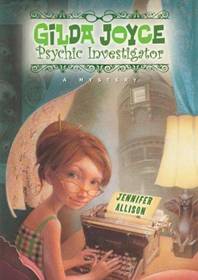
GILDA!! I love this gal!
She’s a plucky tween and a self-styled Psychic Investigator, inspired by the book “The Master Psychic’s Handbook: A Guide to Psychic Principles and Methods”, and its author, Balthazar Frobenius, a professional psychic who worked for police detectives, helping them solve particularly supernatural crimes.
Gilda is on summer vacation before ninth grade and somehow works it so she can stay at her estranged cousin's house in , with his deeply introverted cousin Juliet. Her relatives live in a and Juliet spills it that she, and the house, are haunted by the ghost of her aunt who died mysteriously.
The story moves along customarily, but I love it because Allison’s representation of the supernatural world remains mysterious. There are no gorey manifestations of witches and oogy-boogeys to compete with at the end, but only human mysteries and strange surreal circumstances. And Gilda has so much personality.
One of my favorite scenes is when she dresses up in a disguise so she can visit her accountant cousin at work and trick him into coughing up some evidence of his sister’s death:
“Gilda’s wig was obviously synthetic: originally designed as a bob with flirty bangs, the hairstyle now featured brassy, disheveled clumps. Along with the wig, Gilda wore a bright shade of magenta lipstick, beige foundation makeup, a cheap set of metallic gold fingernails, a strand of fake pearls, her leopard-print jacket, an oversize purse, and a pair of stiletto pumps with pointy toes. The shoes hurt her feet, but Gilda was willing to endure the torture of her high heels because the pain forced her to walk with a pigeon-toed gait, and that was part of the disguise. Gilda had read somewhere that being recognized had as much to do with a familiar walk as it did with one’s face, body, and clothing. Before leaving the house, she had practiced slouching forward and limping slightly with each step… ‘I’m supposed to be a rich, eccentric woman who has some connections with organized crime’”
She actually tries to get away with this, and its hilarious! Gilda has so much personality she carries the story. And there are some unseen twists that impressed me, as well. Very much recommended.
And the website is pretty rockin'. http://www.gildajoyce.com/
Penguin says ages 10+ (I would say more like 12 +, but what do I know about 10 year olds?)
Gilda Joyce Psychic Investigator
Jennifer Allison
Penguin Books
0525476938
(posted by Mandy)
Strange Times at Western High

I have to get over some Emily Pohl-Weary appreciation before I mention her new YA series featuring super-sleuth Natalie Fuentes. Emily (who two handfuls of people will remember reading at our last April poetry series at the Jane Bond from her book of poems, Iron-On Constellations) is faboo. Here’s a bit of to-do on Emily *hunkers down*: Emily won a Hugo Award for her biography on her grandmother, Judith Merril, “Better to Have Loved: The Life of Judith Merril”, which was also a finalist for the Toronto Book Award. She’s a former editor of Broken Pencil magazine, and currently edits Kiss Machine, the “funky art/lit hybrid”. Her first novel, “A Girl Like Sugar”, was great and could also be considered for a young adult audience. She edited a female superhero anthology called “Girls Who Bite Back: Witches, Mutants, Slayers and Freaks”, *huff huff*, AND, something that I am crazy-excited about, Emily has been writing a female pirate comic book, called “Violet Miranda: Girl Pirate”, which has seen two fantastic issues and expects two more. (I was going to put in all these links to each of the titles/projects Emily is part of, but I will instead direct you to her website which has the appropriate linkage: http://www.emilypohlweary.com/about.html).
‘Kay. “Strange Times at Western High” is the first in an anticipated girl sleuth series starring Natalie Fuentes, a ballsy 16 year old who loves Nancy Drew (as does Emily, and I remember reading somewhere about her craziness for the Nancy Drew video game). Natalie is the daughter of journalist parents, recently divorced, and of Argentine/Jewish background. She’s always the outsider, moving from school to school, in a nomadic army-dad way, because of the nature of her parents’ jobs. She has settled in Western High, somewhere in , after moving from , and is immediately thrown in the lap of a mystery involving violence, hidden sports equipment, shady coaches, and the Golden Girls, a blonde posse of the bullying type.
The mystery surrounding Western High moves along customarily, but it is in the details of her characters where Emily shines brightest. She references specifics from culture, hacker culture, urban exploration culture (I was most excited to see), graffiti and comic book references, and to Spanishfolk music. And I’m talkin’ pretty hip references, such as:
“Are any of you named Ramiro Lopez?” [Natalie] asked…
“Who wants to know, Maggie Chascarillo?” asked Romeo.
“That’s not my name,” she growled.
“What, no sense of humor?”…
“What,” she spat. “Do you think you’re the only guy who’s told me I look like Maggie? Puhlease. How many punk Latinas are there in comics? Let me help you out: I can count them on my middle finger”
Oh, and Natalie makes a Zine about her life called “My Very Secret Life”. The pages in the book have little doodles as if they have been taken from her zine, but otherwise, I would have loved to see some more details about her zine (granted, she IS in the middle of issues and has all of this sleuthing to do during the story, I can’t have it all).
And two last funny things I loved. Ruth, Natalie’s friend at Western, is a complete dork. Keep in mind this girl is circa 16 and she’s doing things like running and cartwheeling at people instead of just walking up, and actually throwing air punches to express frustration.
And also this line was great: “It got worse.Much worse. By the end of the night, I had to pull them off each other. And now they’re in love. He’s taking her to Red Lobster”
And there’s a ton of other stuff I won’t catalogue here. I just checked out Emily’s blog (http://www.emilypohlweary.com/index.php) and she mentions her work on book two of this series. So we’ll see it soon, hopefully.
Here are some linkas:
http://www.nataliefuentes.com/
http://www.emilypohlweary.com/natalie.html
http://www.emilypohlweary.com/StrangeTimes.pdf#search=%22%22strange%20times%20at%20western%20high%22%20pohl-weary%22
Strange Times at Western High: A Natalie Fuentes Mystery
Emily Pohl-Weary
Annick Press
1554510392
Annick says 11+
(posted by Mandy)
Subscribe to:
Posts (Atom)